Showing posts with label Reading. Show all posts

Tuesday, April 10, 2018

Reading Notes: The Warlock

There was once a moujik and he had three married sons. He lived a long time and was looked upon by the village as a Koldun or warlock.

When he was about to die, he gave orders that his sons' wives should keep watch over him after his death for three nights, one night for each one. He instructed his body should be placed in the outer chamber and that the wives should spin wool to make him a caftan and no cross should be placed upon him and none should be worn by his daughters-in-law.

The same night, the eldest daughter took her turn beside him and began spinning grey wool. At midnight, from his coffin the father-in-law says, "art thou there?' "I am" she answered frightened. "Art thou sitting?" he asked. "I sit" she replied. "Doust thou spin?" "I spin." "Grey wool?" "Grey." "For a caftan?" "For a caftan."

He moved toward her and asked again, "Daughter-in-law, art thou there?" "I am" “Art thou sitting?” “I sit.” “Dost thou spin?” “I spin.” “Grey wool?” “Grey.” “For a caftan?” “For a caftan.” She shrank into a corner as he kept moving closer. He strangled her and then lay back down in his coffin. The sons removed the body and the next night, the second daughter kept watch over him. The same thing happened. However, the third daughter was sharper than the others and said she had taken off her cross when she had not. Just as he was going to strangle her, she laid the cross upon him. He feel down and died.

She looked into the coffin and there was so much money. The father wanted to take it away with him but knew only someone smarter than him should have it.

The Warlock by W. R. S. Ralston.


The Cross. Source: Geograph

Monday, April 9, 2018

Reading Notes: The Goat's Ears of Emperor Trojan

Once upon a time, there was an emperor, Trojan, who had ears like a goat. Each morning when a barber shaved him, he asked if they noticed anything weird about him. They all replied that his ear's looked liked a goat. Each one was put to death. This occurred for a while and eventually there was hardly anyone left to shave the emperor. The Master of the Company of Barbers was set to go to the palace but suddenly fell ill so he sent one of his apprentices in his place. When the youth was taken to the emperor's room, he was asked why he was there and not the master. He explained the situation the emperor was impressed. The barber began his work. He noticed the emperor's ears but when he was asked about it, he said he didn't notice anything unusual. The emperor asked the barber to come back to shave him everyday.

The apprentice went up to the palace everyday and received twelve ducats as payment. After a while, he itched to tell someone about the emperor's ears. The master knew it was bothering him and asked him what was going on. "I will keep it to myself," the master assured him. He even said he will go dig a hole, say the secret three times, and bury it with the earth. The apprentice thought that was the best plan and went to a meadow outside the town to bury the secret himself.

After a few weeks, a tree sprang up where the hole was and had three straight stems. Some farmer's noticed the tree and cut off its branches to make flutes. When the flutes played, they sang, "The Emperor Trojan has goat ears." It wasn't long before the whole town knew of this secret. The emperor sent for the apprentice and asked him about it. He defended himself saying he never told anyone but the emperor didn't hesitate to bring out his sword. The apprentice got scared and told him about the hole and the tree.

The emperor and the apprentice drove to the tree and cut the last stem down to make a flute. The flute sang, "The Emperor Trojan and goat ears." The emperor knew it was the earth that gave up his secrets and spared the apprentices life but never allowed anyone to shave him again.

To Goat's Ears of Emperor Trojan by Andrew Lang.


Goat. Source: Pxhere

Reading Notes: The Dirty Shepherdess

Once upon a time, there was a King who had two daughters and loved them so much. When they grew up, he suddenly wanted to to know if they truly loved him back. He decided he would give his kingdom to the daughter who best proved her devotion to him.

He asked the oldest daughter how much she loved him. "As the apple of my eye!" she answered. "You are indeed a good daughter!" he responded.

He asked the youngest daughter how much she loved him. "I look upon you, my father as I look upon salt in my food," she answered. The king did not like her answer. He ordered her to quit the court and to never see him again. The princess went up to her room and started to cry. She grabbed her belongings and left the castle. She walked on the road and didn't know where she was going or what she would do. She didn't learn how to do anything except follow household rules and dishes. She was determined to make herself as ugly as possible in order to gain work.

She put on horrible rags covered in mud and smeared mud all over her body. She went around and offered herself to people but people turned her away because she was so dirty. After many days of this, she came across a farm where a shepherdess engaged her.

One day, she was keeping track of her sheep and missed dressing in fancy clothes. She washed herself and put on her old fancy clothes and transformed herself into a lady. The King's son, who got lost hunting, saw her and thought she was lost too. As soon as she saw him, she fled into the woods. The Prince ran after her but couldn't catch her.

When she was safe, she put on her rags again and smeared mud on her face. The Prince found his way to the farm tired and thirsty. He asked for the name of the beautiful shepherdess and everyone started laughing because the shepherdess was so ugly.

The Dirty Shepherdess by Andrew Lang.


Begger. Source: Pexels


Reading Notes: An Adventure of Sir Gawaine

Sir Gawaine rode long without meeting any adventure, and from Pentecost to Michaelmas, nothing pleased him. However, at Michaelmas, he met Sir Ector de Maris and rejoiced greatly. They started talking and they noticed a hand appeared before them showing only until the elbow covered with red samite and was holding a burning candle. The hand vanished into the chapel.

They next heard a voice that said, "Knights full of evil faith and poor belief, these two things have failed you, and therefore you may not come to the adventure of the Holy Graal." The same voice told them a holy man they confessed their sins to said, "you have failed in three things: charity, fasting, and truth, and have been great murderers. But sinful as Sir Lancelot was, since he went into the quest he never slew man, nor shall, till he come into Camelot again. For he has taken upon him to forsake sin. And were he not so unstable, he should be the next to achieve it, after Galahad his son. Yet shall he die a holy man, and in earthly sinful men he has no fellow."

"Sir, you words makes it seem that our sins will not let us labour in that quest?" asked Gawaine.

"Truly," answered the voice, "there be a hundred such as you whom it will bring naught but shame." So Gawaine departed and followed Sir Ector, who had ridden on before.

An Adventure of Sir Gawaine by Andrew Lang.


Sir Gawaine. Source: Wikimedia Commons

Reading Notes: The Sword Excalibur

King Arthur had fought a hard battle with the tallest Knight and although he fought hard, he would have done better had Merlin not enchanted the Knight and cast him into a deep sleep. The king went to a hermit who studied the art of healing and healed all his wounds in three days.

As they left, Arthur said, "I have no sword," but Merlin told him to have patience and he would get him one soon. They came to a large lake and in the middle an arm rose up out of the water holding a sword.

"Look!" said Merlin. "That is the sword I spoke of. The king looked again and a maiden stood on the water. "That is the Lady of the Lake," said Merlin, "and she is coming to you, and if you ask her courteously she will give you the sword."

When the maiden got close Arthur saluted her and said, "Maiden, I pray you will tell me whose sword is that which an arm is holding out of the water? I wish it were mind, for I have lost my sword."

"That sword is mine, King Arthur," she answered, "and I will give it to you, if you in return will give me a gift when I ask you."

"By my faith," said the King, "I will give you whatever gift you ask."

"Well, get into the barge yonder and row yourself to the sword and take it with you. As for my gift, I will ask on my own time."

They got off their horses and went to the barge. They grabbed the sword and heading back toward land.

"I like the sword over the scabbard," said Arthur. "That is not wise to say, the scabbard is worth ten of the sword. If it is buckled on you, you will lose no blood but you may be wounded." said Merlin. They rode back into town and Arthur's Knights gave them a glad welcome saying it was a joy to serve under a King who risked his life as much as any other man.

The Sword Excalibur by Andrew Lang.


Sword Excalibur. Source: Pixabay

Reading Notes: Owen Goes a-Wooing

Owen, a servant at Nannau, was going to see his sweetheart, a milkmaid. He lost his way there because it was dark. He wandered around for some time and fell into Llyn Cynnwch. He could not swim and he sank down. His mind cleared and he realized sinking wasn't an unpleasant experience. He breathed freely like on land and the water became increasingly clearer.

He got to a level spot at the bottom and found a beautiful country with green fields and flowers and trees. An old man came up to him and asked him where he came from. Owen explained and the man responded, "you're welcome" and led him to his mansion.

Owen asked if the old man could show him to Dol y Clochydd because he was already late and was worried his sweetheart would give him up. The old man was hesitant of letting him go but decided to in the end. He took to along a level path which led him to Dol y Clochydd. The stone lifted Owen up when he went up to it and ended up in his sweetheart's kitchen. She was weeping for him and was scared when she saw him. She explained to him that he had been missing for over a month and not an hour or two like he had thought.

Owen Goes a-Wooing by W. Jenkyn Thomas


Ice Cave. Source: Wikimedia Commons

Reading Notes: Helig's Hollow

Many ages ago, the country stretched from Gogarth to Bangor and from Llanfair Fechan to Ynys Seiriol, was ruled by Helig ad Glannach and was called Helig's Hollow.

Helig had a daughter, Gwendud and they said she "appeared lovliest at the Offering on the day of the Nativity, or at the feast of Easter" but her heart was evil, cruelty and deceit.

The son of one of the barons of Snowdon loved her and she loved him in return. Only she would not wed him because he had no golden collar.

Tathal (her suitor) tried for a long time to win, but failed. Gwendud wouldn't change her mind and was determined get a collar by any way possible.

Rhun led an expedition and brought back many prisoners where he held them to ransom. The first captive whose liberty was bought by his kinsmen was a young chieftain who had won a golden collar in the wars against the Picts. Tathal went to him and offered his services as guide.

He stabbed him in the back and brought back his golden collar. Gwendud now agreed to wed him and Helig made a great feast.

A harper, who was asked to play music for the revel, had to gift of second sight and asked the cupbearer to tell him if she saying anything unusual when he went down to the cellar. He came back and said, "a stream of water is flowing into the cellar, and hundreds of little fishies are swimming in it."

They decided to fly away. Everyone else screamed for their lives as water rushed around their feet. They reached Rhiwgyfylchi exhausted and out of breath and waited for morning. When morning came, an expanse of rippling water where Helig's Hollow had been lived. Some fishermen claim to see Helig's Palace down beneath the water's surface.


Helig's Hollow by W. Jenkyn Thomas


Helig's Hollow. Source: Wikimedia Commons

Sunday, April 1, 2018

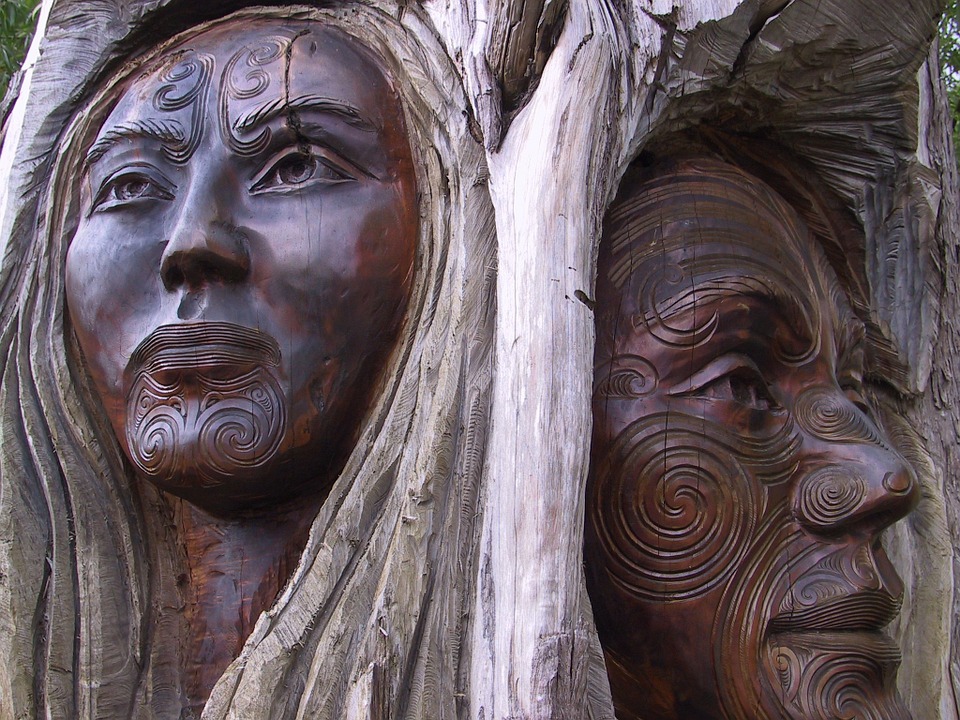
Reading Notes: The First Woman

A long time ago, there were a lot of men living but far away, there was a woman. One young man traveled to the south where the woman was and married her. The son of the headsman started to travel to the home of the woman and heard the man talking to himself. He waited until everyone was asleep. The son of the headsman crept into the house and began to drag the woman away. The husband woke up and ran to get the woman and caught her by her feet. The two men pulled on the woman and eventually pulled her into two. The son of the headsman carried the body back north and used wood to carve to make each woman complete. Meaning, there were now two women.

The woman in the south was a good dancer, but she could not do fine needlework in sewing the furs because her hands were now wooden. The woman in the north was a poor dancer because her feet were wooden but could sew very well. All the women north are skillful with their hands but and the women in the south are good dancers still to this day.

The First Woman by Katharine Berry Judson


Wood Carving. Source: Pixabay

Reading Notes: The Origin of the Tides

A long time ago, a man wandered down the Nass River. When he set up camp, he made rocks of curious shapes. His name was Qa meaning the Raven and he traveled all over the world. At the time, the sea was always high. Qa discovered a rock in the sea and he built a house under the rock. He did this by cutting a hole through it and fitted a lit to it. He put a man in charge of the whole and twice a day he opens the lid and twice each day he closes it. When the whole is open, the water rushes into it and then it's low tide. When the lid is closed, the water rises again and it's high tide.

Tael, a Tlingit chief was carried out to Qa's rock while hunting sea otters. He could not escape the strong current. He through his canoe line over the trees and was carried down by the water into the hole under the rock. He heard a noise, it was the the man putting the lid on the hole. The water began to rise and Tael paddled rapidly until the tide was low where he could get his canoe. Once the tide was high, Tael escaped.

The Origin of the Tides by Katharine Berry Judson


Beach tide. Source: Pxhere

Sunday, March 18, 2018

Reading Notes: The Bullfrog Lover

A man dated a girl who liked him but her mom did not so he wasn't allowed near her house. He made a trumpet out of a gourd and hid down by the water and waited until the woman came down too. When she came down, the man played the trumpet and it played a song that resembled a bullfrog. The song sounded like:

Yañdaska'gä hûñyahu'skä,
The faultfinder will die,
The faultfinder will die.

The woman was so scared of the sound that she dropped the dipper she was using and ran back into the house to tell everyone. They all agreed they would stop interfering with the relationship, so she gave them consent to have a relationship. 

There is another story of a girl who heard a voice singing every time she went down to the water. It sounded like: 

Kûnu'nü tû'tsahyesï', Kûnu'nü tû'tsahyesï',
A bullfrog will marry you,
A bullfrog will marry you.

She wondered what it was until one day she came down and saw a bullfrog sitting on a stone and he asked her to marry him. She said yes and took him back to the house. The girl's family hated him and at last persuaded her to send him away. The next time she went down the water she heard: 

Ste'tsï tûya'husï, Ste'tsï tûya'husï,
Your daughter will die,
Your daughter will die.

So she died. Some people say it was a tadpole who took on human shape. He hid his identity from everybody. Soon, his wife exposed him and he left the house forever. 

The Bullfrog Lover by James Mooney


Bullfrog. Source: Pxhere


Reading Notes: The Deluge

A long time ago a man had a dog, and they went down to the river everyday to howl and look at the water. One time, the man got very angry and yelled at his dog and the dog then spoke back to him and told him that there will be a flood one day that will drown everybody but if you make a raft you will be saved but you have to throw me in the water first. The man could not believe his dog was talking to him. The dog told him that if he did not believe him, he should look at his neck to see the skin was worn off and the bones stuck out.

The man believed the dog and began to build a raft. The flood did come and the man took his family on his raft. It rained for so long that the water covered the mountains and everybody drowned. Once the rain subsided, the only people still alive was the man and his family. He looked over to the other side of a bridge and saw piles of bones ad knew that the people ghost's had been dancing.

The Deluge by James Mooney


The Flood. Source: Wikimedia Commons

Tuesday, March 13, 2018

Reading Notes: Why Dead People are Buried

In the beginning, the Creator made men and women and the animals and they all lived together in the land. The Creator was the big chief of all men and was very kindhearted and was very sorry when anyone died. He sent for his dog one day that was his heard messenger to tell everyone that whenever anyone died, they would be placed in a compound and their wood ashes would be thrown over it. The dead body would lay on the ground and in twenty-four hours, the body would become alive again.

The dog traveled for half a day and began to get tired. He stopped at an old lady's house and looked inside to find a bone with some meat on it so he ate it. He went to sleep and forgot the message he was given to deliver.

When the dog didn't return, the creator called for a sheep to go out and send the message. The sheep was foolish and ate the grasses on the wayside and forgot about the message. He finally remembered his job but forgot the message. Instead of deliver the message, he told everyone the Creator said that whenever anyone died they would be buried underneath the ground.

The dog finally remembered the message so he ran to tell the people the original message. The people didn't believe him because the sheep had told them something else.

Now, all the dead bodies are buried and the dog is not trusted as a messenger. If he had not stopped at the old lady's house, dead people might still be alive.

Why Dead People are Buried by Elphinstone Dayrell.


Sheep sitting in grass. Source: Max Pixel

Reading Notes: Why the Cats Kill Rats

ANSA, who was a king, had a housekeeper that was a cat and house-boy that was a rat. He was a very strong man but had a love for the cat for many years. The rat was very poor and fell in love with one of the king's servant girls but he couldn't give her any presents because he didn't have any money.

The king owned a store and the rat thought he could sneak into the store at nighttime and steal some pears and corn to give to his sweetheart. He did this by using his small size to crawl into a hole in the roof.

The cat noticed that some pears and corn were missing at the end of the month when he was counting the items in the store. The king became angry and asked the cat for an explanation. The cat didn't know the rat had been stealing the items until one of her friends told her it was the rat that had been taking the items.

The cat told the king and he took the rat's sweetheart and beat her. The king fired both the cat and the rat from the store. The cat ended up eating the rat because he was so angry. Now, that is why cats eat rats whenever they see one.

Why the Cats Kill Rats by Elphinstone Dayrell.


A cat and a mouse. Source: Wikimedia Commons

Tuesday, February 27, 2018

Reading Notes: The Three Hunters

Three brothers lived in a mountain village. They were hunters and each brother had a wife and a sister that lived with them all. One day, the brothers went out to hunt and brought back a deer. After they each ate all the meat they wanted, they gave the rest of the leg bone to the sister. She then took the bone marrow inside and toasted it. It was a delicacy and the other wives of the two brothers got very angry watching her eat it. They were so angry in fact that they planned on killing the sister to get her out of the minds of the other brothers.

Once the brothers went out for another hunt, the women decided the time was right to make their plan a reality. When the brothers were on their way back from the hunt, they stopped to rest and noticed a bird was singing a repetitive tune nearby. One of the brothers thought that the bird had a message for them. He speculated the bird might be his sister because it sounded similarly to her. He asked the bird to hop in his hand if he was their sister and the bird hopped into his hand. All the brothers began to cry because they knew that meant the sister was dead.

When they came home, they found the wives but not the sister and no one said anything about her being gone. They found the younger wife crying. The brothers told the wife they knew what had happened because the sister's soul went into the bird and the bird found them. The wife told them the story and the brothers were so angry that they killed the two wives.

The Three Hunters by A.L. Shelton


Man holding bird. Source: Flickr

Monday, February 26, 2018

Reading Notes: Covetousness

A long time ago, there was a pool where all the animals drank at in a deep valley hidden in the mountains. A hunter had set up a trap where a bow would shoot a spear into the animal that rigged it across a road near the pool. A bear tripped on the trap and the spear killed him instantly. A fox came along and cut the string attached to the trap so the hunter wouldn't come back and kill him while he ate the bear's meat. As he was doing so, the trap was triggered and the fox was killed.

An elephant was sleeping nearby where the bear and the fox lay. A rabbit came along and hopped on the elephant until he woke up. When he woke up, he wanted to jump like the rabbit and jumped up and down. When he did, his big jump loosened a big rock and it fell on him and killed him.

Seven robbers came near all three animals and were excited about all of the meat they were going to get. They needed water with each of their meals and designated a group to go get some. When the group left, the others who stayed behind poisoned the meat they set aside for the other group to have when they got back so they could have more of the meat and the bones.

The other group who had gone to get the water knew that the other group was bad. They planned on poisoning some of the water they were bringing back for the others so they could have all of the meat. When they got back, the other group drank some of the water and eventually died.

The group knew they had all of the meat to themselves. They ate it and eventually died too. This story shows that there can be plenty of riches and food for all and you should not be greedy and you should not do what you can not do.

Covetousness by A.L. Shelton


Quote about greed. Source: Flickr

Tuesday, February 20, 2018

Reading Notes: The Story of the Wolf-Bride

A rich man was able to have a son and went to the akhund to get the boy's horoscope. The akhund told him, "your son is fated to be torn in pieces by a wolf." In order to prevent the horoscope, the father went home and built a chamber underground to put his son. He then brought the akhund in to teach the son.

Over time, the son learned how to read and write as he grew up. It came time for him to get married. The father's brother had a daughter and they were to marry. When they did, the families celebrated for a week. The families brought the girl to the son's underground chamber.

When the two were alone, the son put his arm around the girl's waist and she suddenly turned into a wolf and tore him to pieces. She turned into the same girl after she was done. She had no idea how it happened at sat alone until the next morning.

The akhund came to get her in the morning and ask how it happened? She girl said she didn't know. They buried the body together and said, "whatever is willed by fate, that verily comes to pass."

The Story of the Wolf-Bride by D.L.R. Lorimer and E.O. Lorimer.


Wolf. Source: Max Pixel

Reading Notes: The Sad Tale of the Mouse's Tail

The story starts off with a mouse falling into a trap and losing its tail. She asks a Cobbler to sew her tail back on and the Cobbler say's he will if the mouse finds thread. The mouse finds a Jew and asks for thread and the Jew asks her to find him an egg first. The mouse finds a Hen and asks for an egg and then Hen asks for a grain of corn. The mouse goes to the Corn Heap to ask for a grain of corn and they say they want a sieve. The mouse then goes to the Tinker to ask for a sieve and the Tinker says to bring him goat skin. The mouse then goes to the goat and the goat asks for grass from the farmer in exchange for the skin. The mouse then goes to the farmer and the farmer asks for a spade in return. The mouse asked for all of the things in order to get his tail sew back on by the Cobbler.

The Sad Tale of the Mouse's Tail translated by D.L.R. Lorimer and E.O. Lorimer.


Mouse. Source: Pixnio

Wednesday, February 14, 2018

Reading Notes: Of the Merchant and the Barber

Khojisteh went to the parrot at twilight, draped in gold and jewels, and asked him if she could leave saying, "I want to go to my lover at midnight; now tell a short story." The parrot responded with, "There was a merchant in a city that didn't have a child. One day he thought to himself, 'Even though I have gained a lot of riches in this world, I have no child to share my wealth with once I'm dead. Maybe I should share my wealth with the poor and orphans.' He then gave away all his wealth to charity.

He had a dream that night in which someone came to him and he asked them, 'who art thou?' The someone answered with, 'I am the form of your destiny. You have given so much of your wealth to charity that you didn't leave any for yourself. Tomorrow, I will visit you again and you will hit me several times. Once I fall to the ground, I will convert into gold. Take any body part that you require and it will be replaced.'

The next day, as the merchant was getting his hair cut, the brahmin appeared. The merchant got up and started hitting him on the head. As he fell to the ground, he changed into gold. He took the gold, gave some to the barber that was cutting his hair, and told him not to tell anyone.

The barber thought that anyone who hit the brahmin, would turn him into gold. He invited several brahmins to his house and cooked them a feast. He then hit all the brahmins to the point of cracking them open so blood poured out everywhere. They did not turn to gold.

Other brahmins got together to drag the barber in front of the magistrate. The judge then asked him, 'why did you beat the brahmins?' He answered that he thought they would turn to gold because he saw it happen in his own home.

When the merchant was approached by the magistrate he asked if the barber was telling the truth. The merchant said that he went crazy and he was his servant and not his barber."

The parrot then told Khojisteh, "now go." Khojisteh wanted to, but dawn was appearing and her departure was delayed.


Of the Merchant and the Barber by Ziya'al-Din Nakhshabi.


A barber shaving his client. Source: Wikimedia Commons


Monday, February 12, 2018

Reading Notes: The Old Lion and a Cat

Late at night, Khojisteh asked the parrot, "why are you reflecting?" The parrot then responded, "you are making me sad even though I'm not receiving any care of my own. You listen to my stories all the time and one day, you husband will show up and you will not go with him and end up regretting it." Khojisteh then responded, "why was the cat full of regret after killing the mice when he is the one that should be eating them?" The parrot responded by telling him a story about a lion in the desert who was routinely disturbed by the mice who picked out the meat in between his teeth at night. He looked for a way to keep the mice from bothering him and a fox suggested that a cat could come and protect the lion while he sleeps. The cat that watched over the lion never killed any mice but only scared them away. One day, the cat wanted to have the day to do business and left her kitten to protect the lion from the mice. The kitten killed every mouse she saw and then they were all destroyed. The kitten was unaware that she wasn't suppose to kill the mice, only scare them away. The lion had no job left for the cat to do and ended up dismissing her. The parrot's story was to warn Khojisteh that she may regret the day her husband comes.

The Old Lion and the Cat by Ziya'al-Din Nakhshabi


Sleeping Lion. Source: Wikimedia Commons

Wednesday, February 7, 2018

Reading Notes: The Third Task

The story starts off with a character, Pysche,  reaching for her goal of climbing the mountain and if she doesn't accomplish it, she thinks there is no point to her life anymore. She is climbing a mountain and approaches a dreadful wall that seems difficult and deadly. The walls has spikes and and jags that don't seem to end until the gorge below. On the sides of the walls, snakes pop out and slither down the side. The water is warning her that if she attempts it, she will die. Psyche's entire body becomes stone because she's overwhelmed with the task she is about to accomplish. Suddenly, Jupiter's eagle was there to help with its wings outstretched to aid her. He saw the trouble she was facing and knew he needed to help. He asked her if she really thought she would be able to accomplish the task and get a drop from the water below. He went to fill the vial she was holding for her. He dodged all the obstacles, spikes and serpents, and got the water even though it threatened to harm him. He accomplished the task to help Psyche. 

The Third Task, translated to English by Tony Kline. 


Psyche and the Eagle. Source: Wikimedia Commons

Learning Challenge: Empathy

I read the article, " 10 Reasons to Stop Judging People " and I think everyone needs to read this piece. It's such good remind...